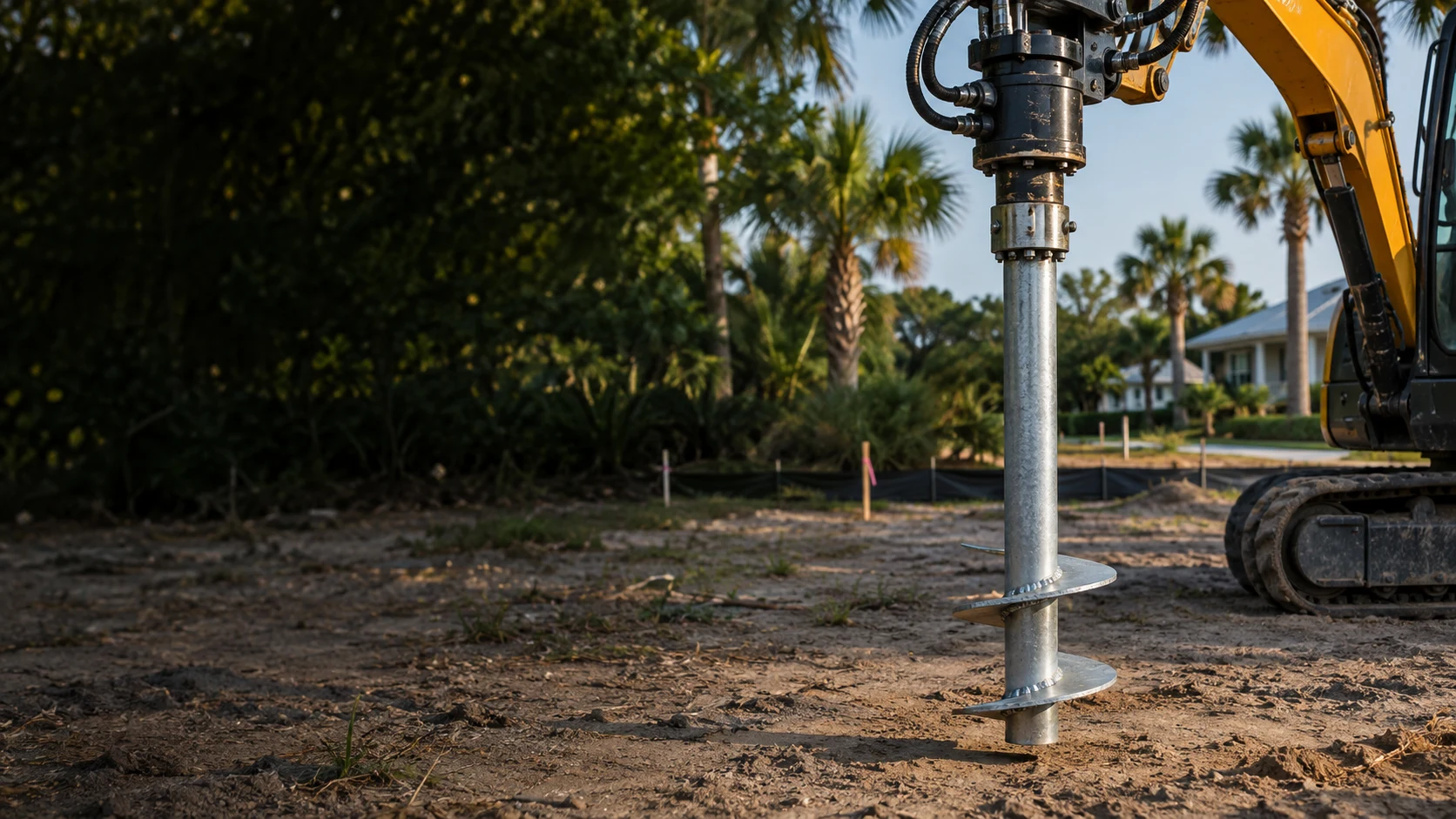
The starting shaft with helical plates.
St. Petersburg · Tampa BayFlorida CGC #1536913
CGC #1536913 HELICAL PILE
INSTALLATIONRequest a bid
BUILT FROM THE GROUND DOWN.Helical pile
Helical pile
installation.
Supply and installation for contractors,
engineers and homeowners.
What are you building?Tap one. Two quick questions, then a ready-to-send brief.
AI / 3D VISUALIZATION TAMPA BAY, FLORIDA
YOUR PROJECT STARTS HERELet’s find your
Let’s find your
starting point.
Three choices. A clear next step.
No contact details needed to explore.
QUESTION 01 / 03
What are you building?
Pick the project that looks most like yours. Choose one to continue.
EXPLORE THE POSSIBILITIESDifferent projects.
Different projects.
One place to start.
Find the work that matches your project.
See what helps move it forward.
01/ 06
NEW HOMES & ADDITIONSA solid start.
A solid start.
Below the surface.
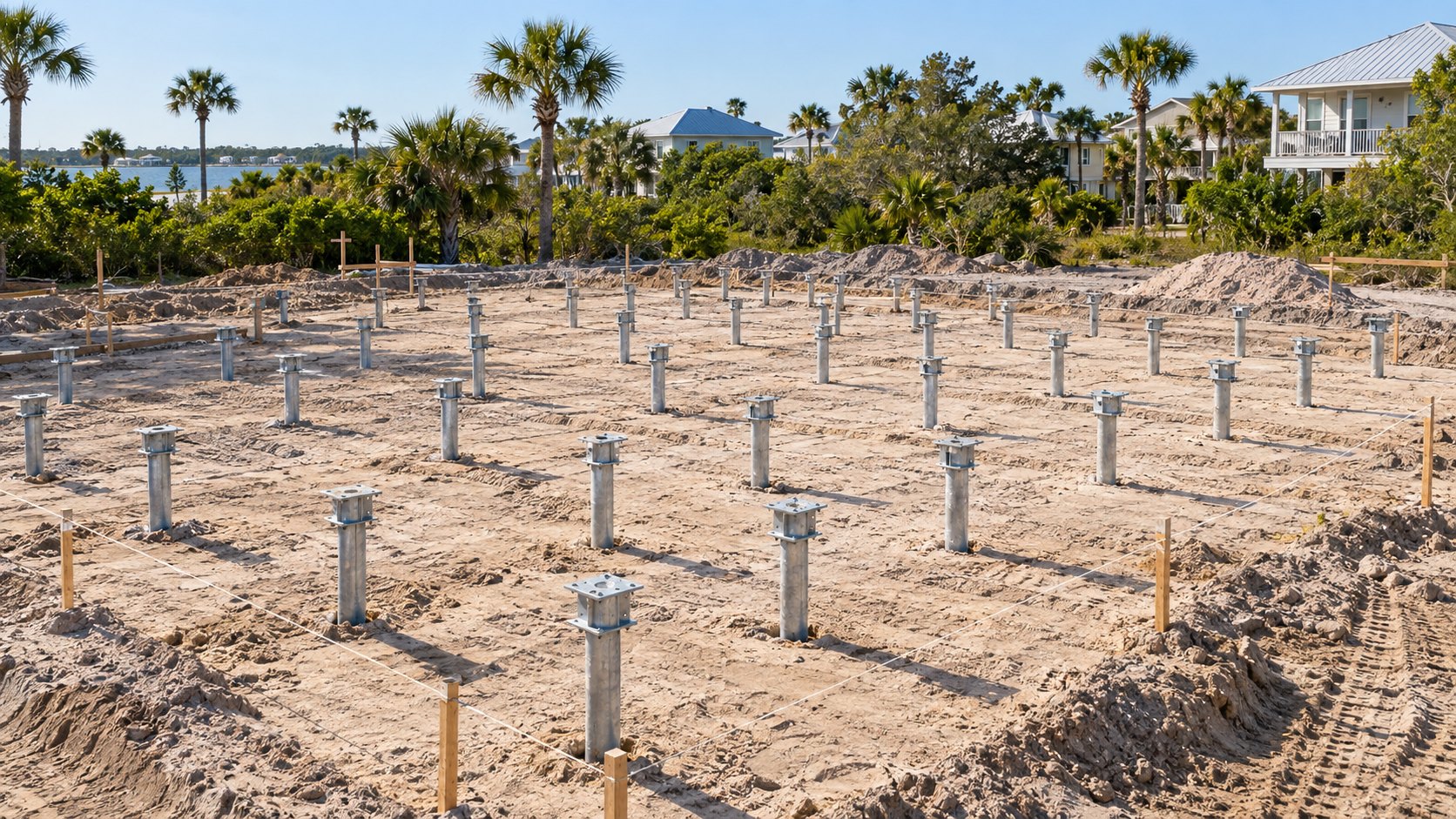
Helical pile supply and installation for new homes and additions, based on the approved foundation documents.
Discuss home foundations Opens an email with this application included.AI concept imagery · System details are illustrative.
FOR THE FIRST CONVERSATION
Bring what you have.
Early in the project? Start with the location and your goal.
DocumentsFoundation plans, pile schedule and available soil report
Site accessBuilding footprint, equipment access and site conditions
CoordinationInstallation scope and target construction schedule
Project engineers establish the final system and acceptance criteria.
Have plans? Request a bidTHE STEEL BEHIND THE STRUCTUREA different
A different
kind of turn.
See the shape of a helical pile.
Two bearing plates. One steel shaft.
01 Supply.02 Install.03 Document.
Put your project in motion HELICAL LEAD / AI VISUALIZATION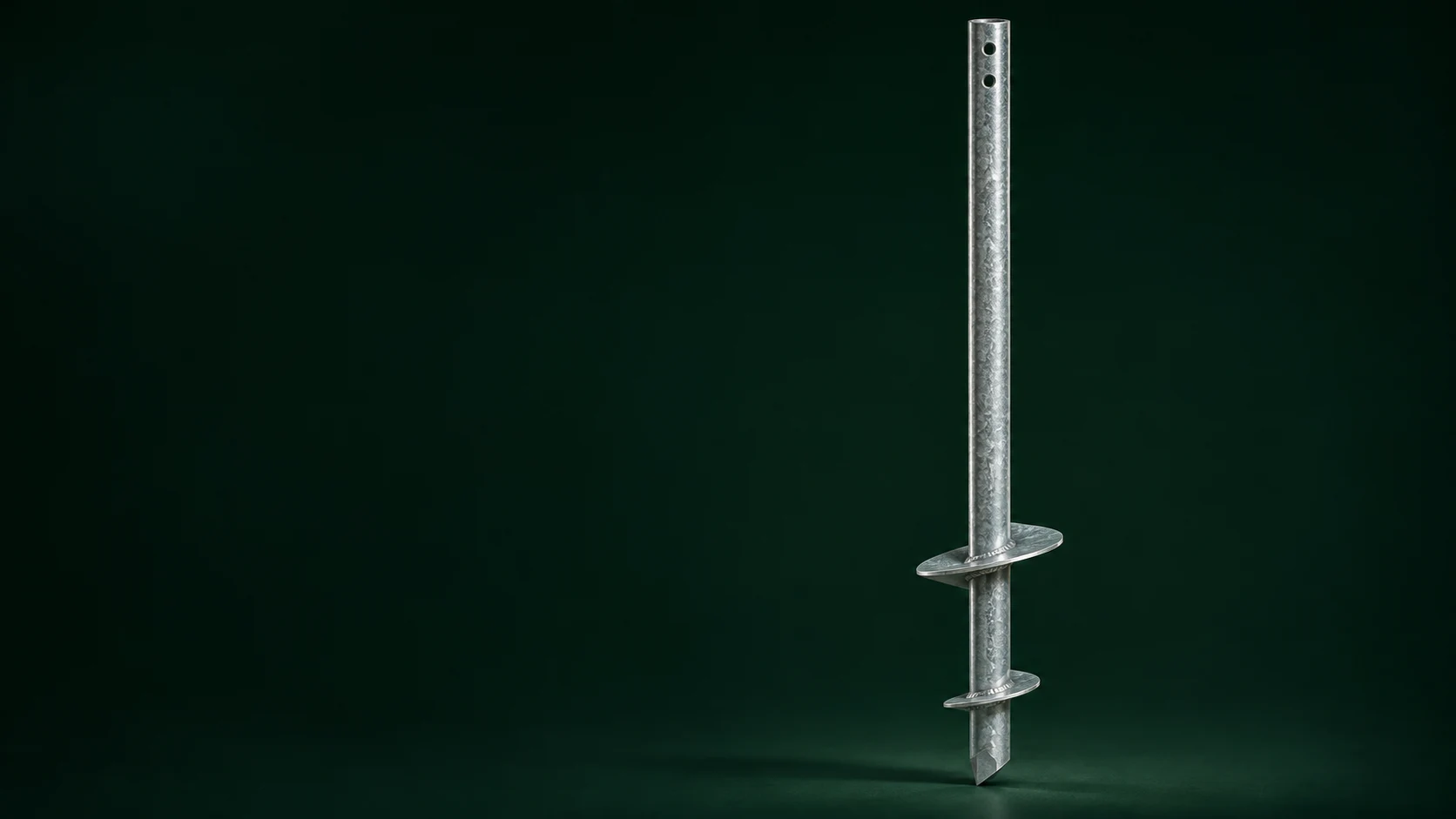
Illustrative model. Geometry varies by engineered design.
THE PATH TO INSTALLATIONKnow the
Know the
next move.
From soil study to installation records.
See what happens, who handles it,
and what moves your project forward.
JAS / PROJECT ROADMAP01 / 05
SITE + DESIGNIllustrative workflow
STAGE 01 / PLAN
Start withthe ground.
The geotechnical and structural professionals establish the soil, load and foundation requirements. The project starts with those decisions.
WHO HANDLES ITOutside design professionals
JAS can coordinate the geotechnical study and work with your design team.
What moves it forwardThe project address, available soil information and foundation documents.
Discuss the planningOpens an email with this stage included.
Choose the JAS scope. Installation only, selected support or coordination from soil study through installation.
Services and deliverables are defined in the agreed scope. Engineering, geotechnical and surveying services are performed by qualified outside professionals.How helicals work.
A steel shaft and helical plates transfer structural loads into the engineered bearing zone.
CONCEPTUAL CUTAWAYVertical bearing piles
A shaft transfers load from the structure to the engineer-selected bearing zone.
Illustrative only. Final system, geometry and acceptance criteria are project-specific and set by the engineers.Discuss this application
Coupled sections extend the pile to the required depth.
An engineered bracket connects the pile to the structure.
Depth and pressure or torque readings document installation.
The engineer sets acceptance criteria. Torque-to-capacity calculations depend on the pile system, manufacturer data and soil conditions.
Common questions.
Who designs the helical pile system?
The geotechnical engineer designs the piles; the structural engineer provides loads. JAS installs to the approved documents.
Can JAS supply the piles and install them?
Yes. We supply leads, extensions, equipment and crew.
Can JAS coordinate a geotechnical study or monitoring?
Yes. We coordinate studies and required observation with outside geotechnical engineers.
What installation information can JAS document?
Pile depths and recorded pressure or torque readings, according to project requirements.
What should I send for a bid?
Send the address, available plans, soil report, structural loads, access details and schedule.
Serving St. Petersburg and nearby communities within approximately 60 miles.
THE JAS PROJECT DESKYour project.
Your project.
Your starting point.
Have engineered plans? Send the scope.
Need help getting there? Let’s talk.
01 / READY FOR PRICING
Plans in hand.
Bring your project to our installation team.
- Stamped plans and pile schedule
- Available geotechnical report
- Site access and target schedule
02 / EARLY IN THE PROJECT
Let’s build a plan.
Choose the support you need from JAS.
- Geotechnical study coordination
- Coordination with your design team
- Pile supply and installation
Prefer email?info@jasbuilder.com
5920 Carrier St NSt. Petersburg, FL 33714
FLORIDA CERTIFIED GENERAL CONTRACTORCGC #1536913